We who ride in the dark
The story of a small organisation with big visions, and a plan to save the world. Or at the very least, to make it a touch less lonely.
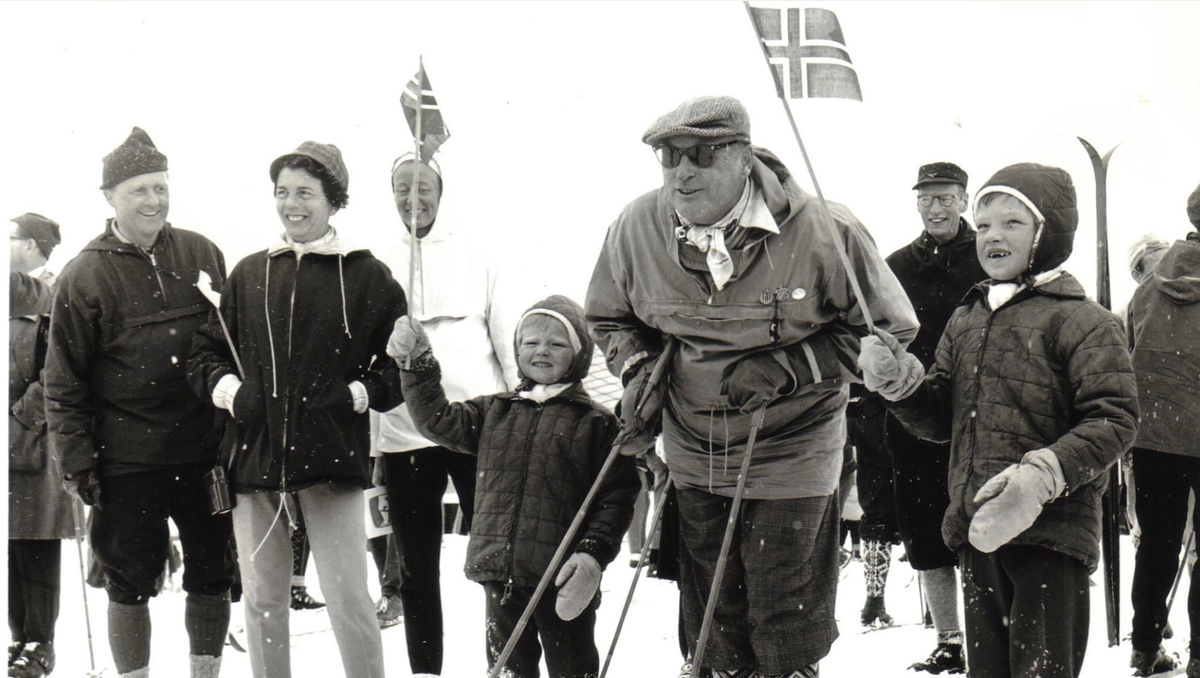
In 1964, King Olav sent a group of blind skiers out into the tracks at Beitostølen. It was chaos. It was brilliant. It was the beginning of something no one quite knew what would become. Six decades on, we realise that the world's largest winter sports event for people with disabilities is really about rather more than skiing.
The quiet pandemic of loneliness
Aristotle called man a zoon politikon, a social creature who can only realise himself in the company of others. Two thousand years later, we sit with smartphones that give us access to billions of people, and feel more alone than ever.
The numbers are brutal. People with disabilities experience twice as much loneliness as the rest of the population. The worrying part is that those who scroll the feed at work and run for the bus with AirPods in their ears are gaining on us. It has become a Paralympics of loneliness. The disabled have dominated this particular event for far too long. Now, at last, we have some competition.
At Ridderrennet, we saw it coming. Our blog posts describe what we call the "new" disabled. People who look perfectly healthy, but who carry an invisible baggage of isolation, digital anxiety and not belonging. Meanwhile a debate rages about screen time, and it is missing some important nuance. Because what happens when the body fails, but the soul has no passport to the digital world?
Snot, sweat and lactic acid
In an age when diversity and inclusion are meeting resistance around the world, Ridderrennet takes a different approach. Our strategy is not PowerPoints and fine speeches. It is snot, sweat and lactic acid.
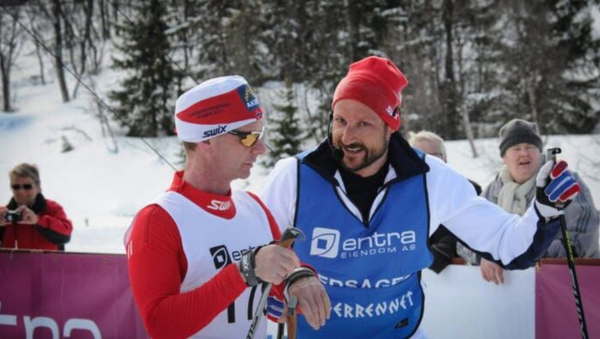
Queen Sonja got the message first-hand when she was a guide. "Blow your nose on your mitten!"
That is inclusion in practice. A royal family that turns up and skis the course alongside those who need a guide. From King Olav, who started it all, to Princess Ingrid Alexandra handing out medals at the finish.
The dugnad spirit (Norway's tradition of everyone turning up together and getting stuck in) breaks down barriers and deepens our understanding of what our fellow citizens are up against. It is perhaps the single greatest thing we can contribute to a warmer society.
The bank as gatekeeper
We spend a good deal of time working on insight, trying to understand what actually shapes the world. Be included by your bank, and you are included in society. It sounds trite, until you stop to think. When digitalisation becomes a prerequisite for paying the bills, it is suddenly a matter of dignity.
What if the transporter never came? Most of us grumble briefly, some turn into Karens, others get on with it, and we all move on. Not everyone can.
The future of elderly care is not just about more warm hands. It is equally about technology that includes rather than excludes. That technology already exists. The fascinating thing is that the key to it sits on Beitostølen, in sixty years of experience in adapting things so that everyone gets to take part, learn and grow.
When knights meet soldiers
The Norwegian Armed Forces don't turn up with lorries and hot soup. They turn up with leadership in practice, and conjure up logistics and solutions no one had quite thought possible. The partnership between Ridderrennet and the Armed Forces is as old as the race itself. The then Chief of Army did not merely see a chance to help. He saw a chance to learn.
For what does one learn from leading people who cannot see the terrain?
One learns to communicate. One learns that trust is built through action. One learns that the best solutions nearly always come from those who know the problem in their own bones.
The blind man's vision
Erling Stordahl lost his sight entirely at thirteen. By fifteen he was the national champion on the accordion, and gave the takings from his tours to the Norwegian Association of the Blind. In the 1960s, he founded Ridderrennet.
Erling used to say that "life is what your thoughts make of it." We all walk in the dark. Some because they cannot see with their eyes, some because they cannot see with their thoughts. Most of us because we do not see each other.
We at Ridderrennet are in the business of building a better society. Not by pretending that we are all the same, but by celebrating that we are not.
A small organisation with big plans
Let us be honest. We are a small organisation. A handful of committed people, a heap of volunteers, and partners who see what we see: that community is the best medicine for very nearly everything.
Perhaps that is why we can see clearly. When you cannot afford to do things in the usual way, you must find other ways. When you have lived a life in a society that was not always built with you in mind, you learn how to build things for others.
When we aren't staging events and saving the world, we offer talks, seminars and working partnerships for anyone who wants to bring diversity and inclusion into the heart of what they do.
The future begins at dawn
For over sixty years Ridderrennet has been a pioneer in inclusion. We have seen that mastery builds confidence, that community beats loneliness, and that limits are there to be moved.
Now we are looking forward. Toward a world in which technology includes rather than excludes. Toward a business community that understands that diversity means better numbers, happier people and greater impact in the world. Toward a society in which no one need be alone.
If you are there for us, we are there for you. We ride at dawn.
It may sound a touch grandiose for a small outfit from Beitostølen. Then again, it sounded grandiose in 1964 too, when a blind man decided that everyone should be able to ski. Look how that turned out.
The King reached the finish. Ridderrennet reached the finish. And that turned out to be the start of a movement for diversity and inclusion.