When the body fails, the soul needs a passport
A debate is raging about screen time. It is missing some crucial nuance. And Beitostølen, of all places, already holds the key to the future.
We are all only temporarily able-bodied.
Look at your hands. Not as they are now, scrolling effortlessly on your phone, but as they will look in 2050. The skin is paper-thin, the joints ache, and the dexterity that let you hammer out messages at breakneck speed has been reduced to a tremor. You are sitting in a chair that has moulded itself to a body that no longer does as it's told. Your friends are either gone, lost to dementia, or they have moved to a sunny coast you can no longer face the journey to. The world outside races on at a pace that makes you dizzy. Your world has shrunk to the size of the living room.
The feeling of being on the outside is no longer an abstract fear you once read about in the paper. It is your new reality. You have become "them."
This is the moment the paradox hits with full force. The device in your hand is no longer a source of guilt over screen time. It is the only umbilical cord you have left to civilisation.
Against this backdrop, the story of Mats Steen reads rather like a proof of concept for our own old age.
The two-faced Janus of the digital
You know the story. His parents believed Mats was lonely, only to discover that as Lord Ibelin Redmoore in World of Warcraft he was a chieftain, a flirt and a confidant. He was living a full life, simply not in the physical dimension. He had social recognition, that small but necessary prerequisite for a good life, in an arena where the wheelchair was invisible.
And yet we find ourselves in a strange split. While Mats found a social life through the screen, psychologists and sociologists tell us that the generation after him is losing theirs through the very same device. They point to anxiety and depression shooting skywards in step with the spread of the smartphone. Stanford professor Anna Lembke calls the phone a modern needle, delivering digital dopamine.
How can the same technology be Mats Steen's calling and the curse of today's youth?
The answer lies in the nuance that so often falls out of the debate. Amy Orben at Cambridge has found that it isn't the screen time that is the problem, but the pattern of use. Passive scrolling breeds envy. Active participation, like building a community in Azeroth, breeds meaning.
From Beitostølen to cyberspace
Norway has a singular history to draw on here, one that could yet solve the human side of the technology.
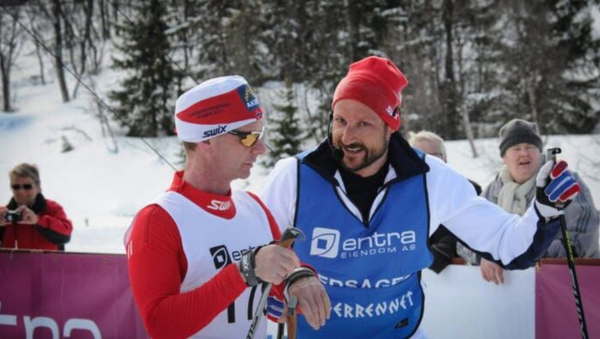
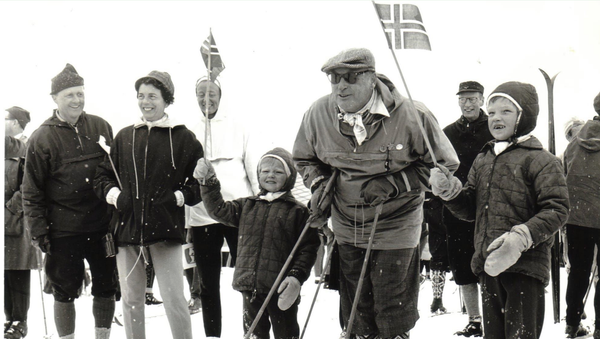
Out of Ridderrennet sprang Beitostølen Helsesportsenter (a health sports centre) and a whole field known as adapted physical activity. Absolutely central to all of it was Inge Morisbak, with a revolutionary and disarmingly simple philosophy: we don't fix the person so they fit the sport. We fit the sport to the person.
Now we need the equivalent of Inge's thinking, but turned towards a simple philosophy for adapted social connection.
We need to bring in "digital occupational therapists" and "social technologists." These would act as pilots guiding people into digital communities. We need moderators and facilitators who create safe rooms for everyone, older people very much included, as Stuart Duncan did with Autcraft, a Minecraft server tailored for children with autism.
And we need the people who actually understand the connective technology. Which is to say, the telecoms industry and the providers of digital communication.
We must move from passive entertainment to active community. AI companions and robots can ease anxiety, but as MIT professor Sherry Turkle puts it, they offer the illusion of companionship without the demands of friendship. When you are genuinely ill, you need a hand to hold. It is not the robot's. That hand is cold.
The solution may lie in using AI as a kind of digital matchmaker. An algorithm that finds the one person in the Netherlands who also happens to love orchids and has lost a spouse, and brings the two of you together. In that case the technology is not a replacement for the warm hand at all. It is more like a glove that allows your own hand to reach further.
The bridge we must build
We are heading at full tilt into a wave of ageing and an epidemic of loneliness. To believe we can solve this with physical visits alone is mathematically naive. We are going to run out of hands.
We must stop demonising the screen and start democratising it.
Mats Steen was picked up by a community. Real people who chose to invest in one another through a digital medium. The keyboard was the bridge. Inge Morisbak has already cracked the code. We have to fit the technology to the person.
When it is your turn one day to sit there, with your world shrunk to four walls, you will not care in the slightest whether the technology is "natural" or not. You will care only whether there is someone at the other end who knows you exist.
Let us build that bridge together, and with care.