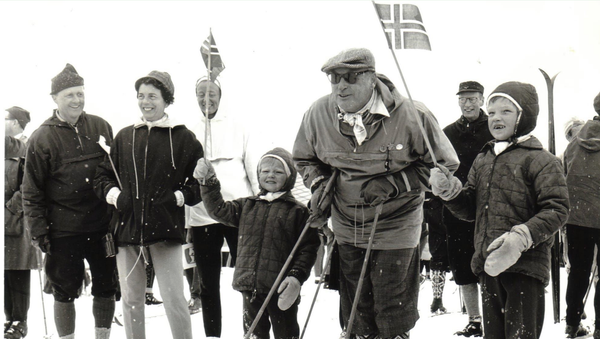
Norway's most underrated leadership role
It is about replacing control with relationships and collaboration. A clear setting of expectations works as a contract, and creates the psychological safety to perform.
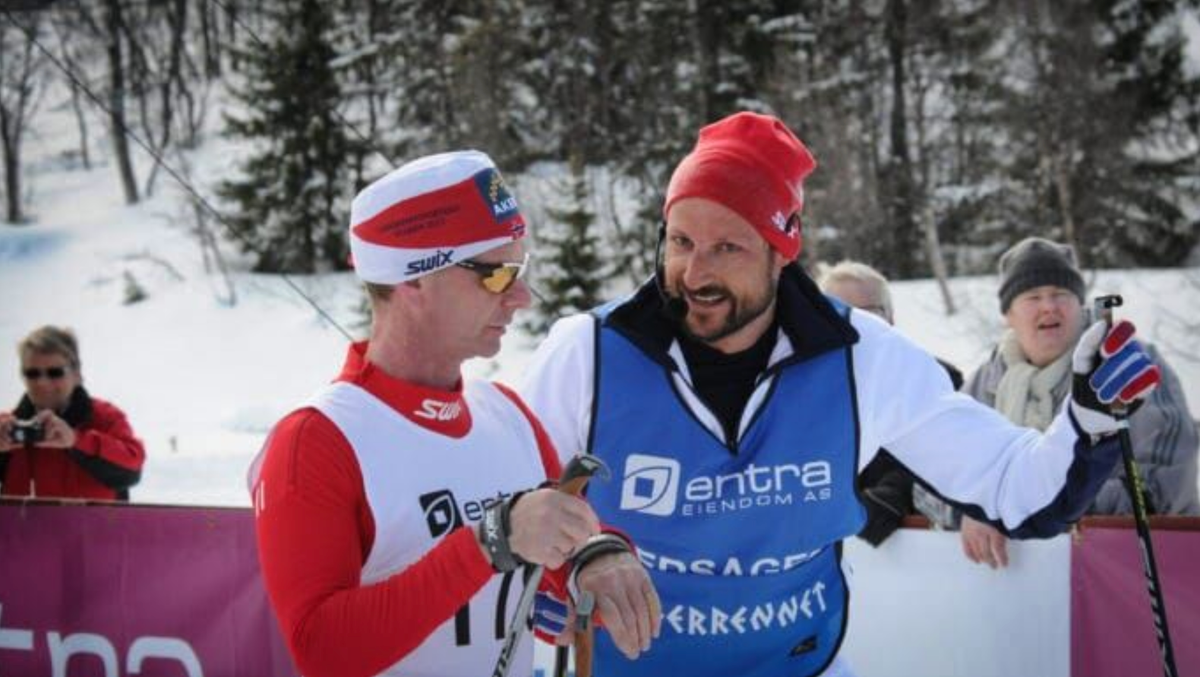
You won't have heard of them at business school. McKinsey hasn't published a report on them. At Beitostølen, at minus fifteen degrees, with fingers stinging from the cold and icicles on the eyelashes, Norway's best leaders are being trained.
Every winter, a cohort of students from the Norwegian School of Sport Sciences arrives at Beitostølen. They have done the reading on training theory, physiology and sports psychology. They know their theory. Then they are handed a blind skier and told to guide them safely over the mountain.
No textbook prepares you for that.
How do you explain a turn to someone who has never seen one? How do you describe that the terrain "opens up"? How do you build trust with a stranger in fifteen minutes, trust enough that they set off down the hill with their life in your hands and your words?
This is not a metaphor for leadership. It is leadership.
Leadership without a title
At business school you learn top-down leadership. You are given charge of budgets, projects and the people below you in a hierarchy. You learn to delegate, motivate and measure. Those are useful skills.
At Beitostølen you learn something rather different. How to lead without any power at all.
The guide has no title, no salary, no option to say "because I'm the boss." All you have is your voice, your words and your ability to see the world through the eyes of someone who cannot see. It is quite the exercise in empathy.
And empathy, it turns out, is the very leadership competence the business world is desperately looking for, and rarely finds in a classroom.
The royal lesson
There is one organisation in Norway that has understood this, and that is the royal family.
When Crown Prince Haakon visits a company, he does not talk about himself. He asks questions. He listens. He makes people feel seen. Then he moves on to the next room and does the same, hour after hour, day after day.
That is the role of a guide. He and his family do precisely the same when they turn up for us at Beitostølen.
The royal family leads through presence. Alongside rather than in front, and by lifting others rather than themselves. Perhaps that is why the monarchy still has legitimacy in a country otherwise allergic to hierarchy.
That is what the students from NIH learn on the tracks at Beitostølen. That the most important job of a leader is not to shine themselves, but to see to it that others cross the finish line.
The school no one talks about
The Norwegian School of Sport Sciences has made the guide programme an integral part of the degree. It is on the syllabus. It is not an elective, nor a cosy volunteering initiative.
Stop and think about that. Norway's leading institution for the study of sport has concluded that guiding disabled people matters just as much as anatomy and biomechanics. They have understood that the best way to learn about people is to actually be there for a person.
They are not the only ones. Students from the University of Inland Norway turn up, year after year. Western Norway University of Applied Sciences sends its people. During Children's Ridderweek, pupils from Lidar school come along. These are schoolchildren suddenly having to explain the world to a younger child who experiences it differently.
There is no Norwegian leadership programme that offers this experience. No MBA, no executive course, no "leadership in change" weekend at a mountain hotel with a spa.
Just snow, sweat and trust.
What you actually learn
A guide learns to communicate precisely. You cannot shout "look out!" at someone who looks neither up to, nor down on, anyone in life. You must find new words for everything you have taken for granted.
A guide learns to read other people. You have to notice when the rhythm shifts, when the breathing gets heavier, when frustration starts to build, and adjust before it becomes a problem.
A guide learns how to fail. Sometimes you give the wrong instruction. Then the two of you are buried together in deep snow. You have to get back up, apologise and try again. There is no form to fill out, no HR department to hand it off to. Just two people who have to work it out between them.
A guide learns that leadership is not about the self. That is the most important lesson of all.
A challenge to business
Do you make hiring decisions? The next time you see a CV with "guide at Ridderrennet" on the list of voluntary work, pause a moment.
This person has stood in situations you cannot simulate in an assessment centre or learn from a deck of slides. They have made decisions in real time, with consequences that cannot be undone with Ctrl+Z. They have built trust with strangers, communicated under pressure, and put someone else ahead of themselves.
They have done the job many managers never learn to do.
They have also been through the perfect school for leading the next generation of workers, generation Z. It is about replacing control with relationships and collaboration. A clear setting of expectations works as a contract, and creates the psychological safety to perform. The guide becomes a facilitator who keeps things moving through mutual trust and continuous dialogue, rather than through orders.
A love letter
This is an article about leadership. It is also a love letter. To the students from NIH who travel up to Beitostølen and make Ridderrennet possible. To the ones from the University of Inland Norway who turn up. To the crew from Western Norway University of Applied Sciences. To the pupils from Lidar. To the boys and girls from the Armed Forces who come back as thoughtful grown-ups. To everyone who has taken on the task and said, "I'll go in front. Trust me."
You don't get mentioned in the leadership columns of Dagens Næringsliv. You don't get bonuses or share options. You do something almost no one else does. You learn to lead by serving. It is the only style of leadership that really lasts.
Just ask a decent chap by the name of Haakon. He probably won't answer. He'll ask you what you think, and listen.
Ridderrennet is a school. The guides are pupils and teachers, both at once.