Are you ready for the Paralympics of loneliness?
They look perfectly healthy. They sprint for the bus, they scroll the feed, they perch on expensive ergonomic chairs in their home offices. And yet they are quietly qualifying for a sport those of us with disabilities have dominated for rather too long.
We're talking about the "new" disabled. You lot out there, the apparently able-bodied.
As an organisation for the blind and disabled, we've long held a monopoly on being left out. We know the heavy silence after the door closes, and the invitations that never arrive because "it'd probably be too much faff with the wheelchair." Now, it seems, you able-bodied types are breathing down our necks in the statistics. Not to be outdone, apparently.
A new national sport
We really ought to apply for some new events in the Para-Games. How about the "100-metre quiet longing"? Or "team sports without a team"? Not to mention the likely crowd favourite, "synchronised swimming on social media." Everyone comparing themselves to everyone else, and drowning a little on the inside, all at the same time.
It's irony and gallows humour, I grant you, but the seriousness sits like lead on the chest. Loneliness doesn't stop at the white cane or the crutches. It has begun to catch up with you, the one running late for work, and you, the one left behind in the flat after yet another day on Teams.
The numbers have company
Globally, two in three people with disabilities are chronically lonely. Those are brutal numbers. As for you "healthy" lot, we're practically shouting from the commentary box: look at those split times! You're closing the gap. Over 20 per cent of the "healthy" population in Norway is now lonely. That's one in five. That's the thumb on your own hand, the Friday of the working week, and the goalkeeper and right-back of the national team. Enough people to fill a soccer stadium forty times over.
Among young people in Norway, over 100,000 are out of work and out of education, many of them isolated behind a screen. Working from home has left employees over 55 feeling abandoned. That's an open goal from six yards, and the keeper has already wandered off for a cup of tea.
It's spreading like a quiet zombie apocalypse. We shuffle about as the living dead, each in our own little digital fortress. To quote The Walking Dead, Peer Gynt and Kierkegaard in a single breath: "We are the living dead."
When loneliness becomes the diagnosis
We need to stop treating loneliness as simply a bit of a downer. It's time to call a spade a spade. Anyone who is chronically lonely, regardless of starting point, is socially disabled.
The research is unambiguous. Loneliness reduces cognitive capacity, productivity and creativity just as surely as a physical injury does. The WHO calls it a global health threat. The risk of heart problems, dementia and early death is the same as if you were smoking 15 cigarettes a day. You get none of the pleasure of lighting up, and all of the lung damage.
So, to those of you apparently fit and well who find yourselves sitting alone, welcome to the club. We rather wish you hadn't had to join, but seeing as you're here anyway, shall we pull together?
We have the drill you're missing
This is where the hope lies, and possibly the solution. Those of us who have lived with limitations for a long time are, in a manner of speaking, the veterans of this particular sport. We've developed strategies for surviving the silence that the rest of society now rather urgently needs to learn.
We know how to build small, reliable networks when one can't simply nip out on the town every Friday.
We know the value of asking "how are you, really?", because we may not be able to read it off your face.
We've learnt that technology can be a bridge, not just a wall.
Stories like that of Mats Steen, the gamer "Ibelin," show us how digital spaces can give enormous social life to someone who would otherwise never have left the bedroom. Use the technology properly, with universal design, and online communities can reduce loneliness dramatically. It requires that we log on to meet, not merely to measure ourselves against one another.
Let's train together
We don't need more reports to gather dust. We need a new team spirit.
At work
Let's introduce hybrid models that actually work. A proper coffee break is worth a hundred likes on the intranet. Managers must learn to spot the signs of isolation, whether the employee is fixed to a wheelchair or to an expensive office chair in the City.
In society
Think of it as grassroots sport for the lonely. Those of us who have fought for accessibility for years can bring courses in resilience and psychological staying power. You able-bodied lot can contribute the logistics, the transport and a helping hand. Together we can become each other's resources. Together we build psychological safety.
"Mr Gorbachev, tear down this wall!"
Loneliness ought to be top of the national agenda. It is not a personal weakness, not for those of us with a diagnosis, and not for those of you who have simply been clocked round the head by life. It is a social problem, and we can only solve it by knocking down the walls between us and them.
Para-sport
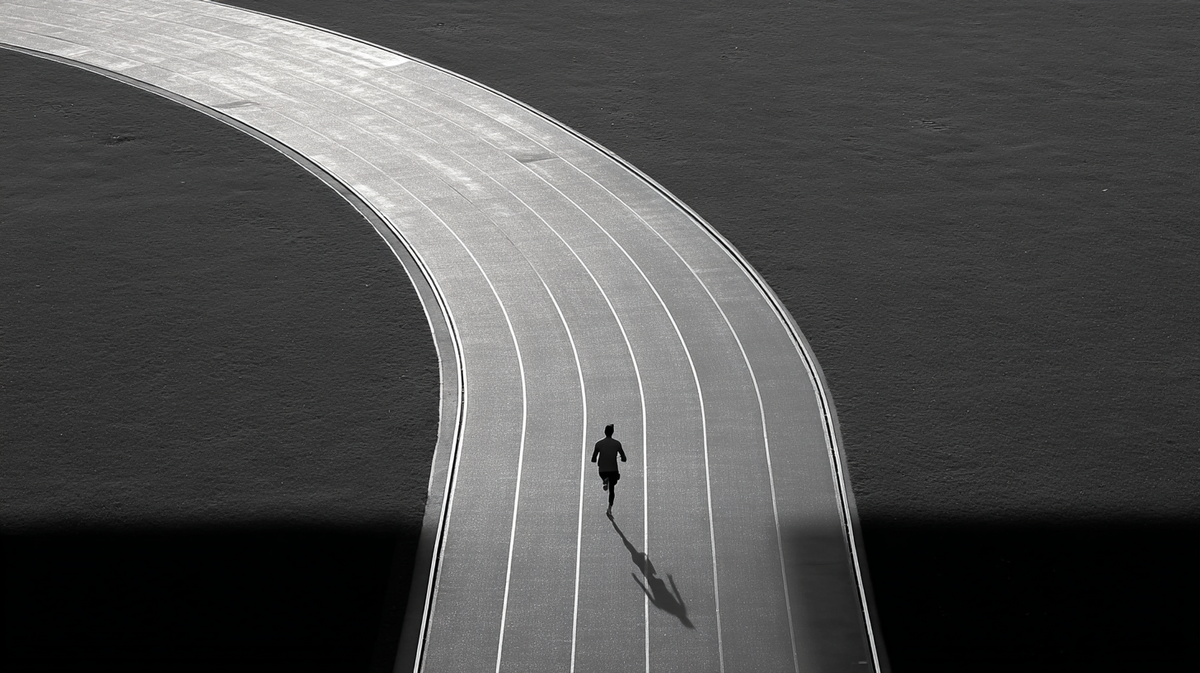
Come to think of it, the idea of a para-sport for loneliness is really rather brilliant. A championship in loneliness would, paradoxically, be the most sociable event of the year. Picture the announcer over the tannoy: "Competitor number 4 in lane 2 is unfortunately disqualified for exchanging a smile with the athlete beside him!"
It is the only sport that collapses the moment it succeeds. Rally the troops and the whole premise goes up in smoke. Precisely the kind of self-defeating contradiction we can get behind.
So. Coffee? Our shout, if you'll hold the door.