Where everyone becomes a hero
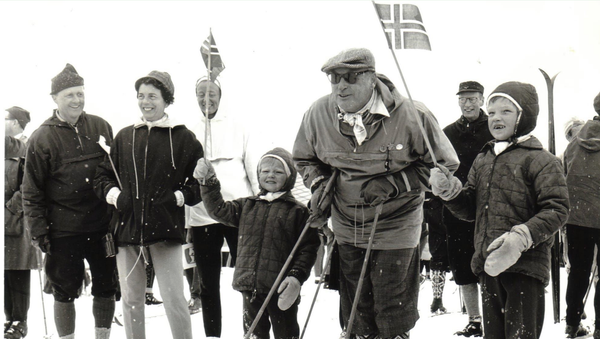
King Olav opened Ridderrennet and sent a gaggle of blind and partially sighted skiers straight onto the course. A spot of royal chaos was the starting gun for a movement built on inclusion.
Remember your first time on skis? Arms, legs, poles and skis pointing in every direction except forward. You had words with mum, dad, the Easter Bunny, your older siblings and King Winter himself, and declared the whole thing quite impossible. Now imagine doing the lot blindfolded, or strapped into a chair.
Sounds like a joke, does it not? It happens every year at Ridderrennet. And when it happens, something rather magical takes shape. Norway's most inclusive festival and hero factory becomes something far bigger.
More than a ski race
Ridderrennet is living proof that a bit of support, a great deal of willpower and a fair amount of laughter will get all of us over the finish line, and build something grand along the way.
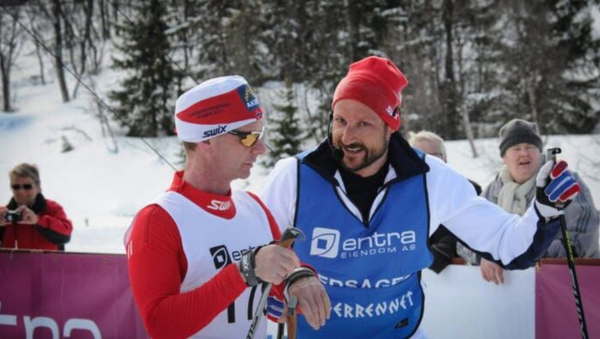
For over sixty years, the event has turned people with disabilities into heroes and spectators into fresh believers in humanity. More than 400 participants from 10 to 15 countries gather at Beitostølen each winter and spring to take on cross-country skiing, biathlon, snowboarding, snowshoeing and dog-sledding. Roughly 2,000 people are on the go once you count the guides, volunteers and support crew.
The highlight is the legendary Ridderrennet itself, with everyone from first-timers to Paralympic champions in the field. The crowd cheers every single skier across the line without flagging. All cross as heroes.
Actor Christopher Reeve, Superman himself, put it well: a hero is an ordinary individual who finds the strength to persevere and endure in spite of overwhelming obstacles.
That is exactly how it is at Ridderrennet. But what makes the magic? And what can the rest of us learn from it?
A bold dream
The story begins in the early 1960s, when the blind musician Erling Stordahl asked a rather pointed question: why shouldn't visually impaired people compete on skis? He recruited the Norwegian Armed Forces, and at Easter 1964 the first race went ahead. Nearly a hundred soldiers turned up as guides. King Olav opened the event and sent a gaggle of blind and partially sighted skiers straight onto the course. A spot of royal chaos was the starting gun for a movement.
In 1968 the event expanded into Ridderweek and opened its doors to people with physical disabilities as well. Stordahl founded the Beitostølen Health Sports Centre in 1970 with substantial backing from the Lions Red Feather campaign. Today Ridderrennet is run as its own association. The Armed Forces remain a cornerstone of the whole operation and have, among other things, developed biathlon rifles for blind skiers. King Olav was the first patron, with Harald, Märtha Louise and now Crown Prince Haakon taking up the baton in turn. Members of the royal family have even served as guides themselves, which is the stuff of hero stories in its own right.
Heroes made year after year
From that pioneering race in 1964, Ridderrennet has grown into the world's largest annual winter sports week for people with disabilities. In 2025, the sun was kind enough to shine over participants from every corner of the world. One athlete from OneTeam El Salvador, paralysed after a shooting, had learned to ski on a sandy beach. Yes, really.
The event has inspired similar initiatives in the USA, China and elsewhere, and Ridderrennet received the Award of Honour at the 2014 Norwegian Sports Gala for bringing the joy of sport to tens of thousands. Plenty of Paralympic stars got their start right here.
Behind the scenes stands a small army of volunteers and partners: Lions members, Beitostølen Health Sports Centre, the Norwegian School of Sport Sciences, locals and the Armed Forces, all keeping the whole thing on the rails. Sigurd Dahlen, 78, has been at it for 54 years and is now a pillar of the legendary rigging crew. Living proof that age is just a number.
Community against loneliness
Why does Ridderrennet still mean so much, more than six decades in?
The secret is that it takes on loneliness and exclusion with community, leadership and mastery. Team Pølsa is a lovely case in point: several of them first put on skis at Children's Ridderweek, the children's edition. They are a neat illustration of how team spirit turns barriers into bridges.
Participant Maren Elise Wam Næss described her first Ridderweek like this: it was magical to be part of the flock.
Veterans like Tore Johansen, with over 50 starts, are living proof that it inspires lifelong loyalty.
Then Prime Minister Erna Solberg left no one in any doubt: quite the experience.
Join in and lift Norway
Ridderrennet tears down physical and mental barriers, breaks old prejudices, encourages rehabilitation and development, and creates heroes who overcome overwhelming obstacles. It is also a rather brilliant crash course in leadership, with diversity and inclusion firmly at its heart.
It is also something larger. A shield in a chaotic world against those who would cast diversity as a threat. A quiet sort of power that stands up for strong community.
Next time you face a challenge, big or small, spare a thought for the knights at Beitostølen. Come along as a volunteer, a sponsor, or simply as a voice in the cheering crowd at the next Ridderweek. Together we make Norway a place where everyone can be included, and where every one of us gets to be a knight and a hero.