The Queen was told in no uncertain terms: "blow your nose on your mitten!"
In an age when diversity and inclusion are meeting resistance around the world, and are reduced at best to polished after-dinner speeches, the story of Ridderrennet and the Norwegian royal family tells a rather different tale.
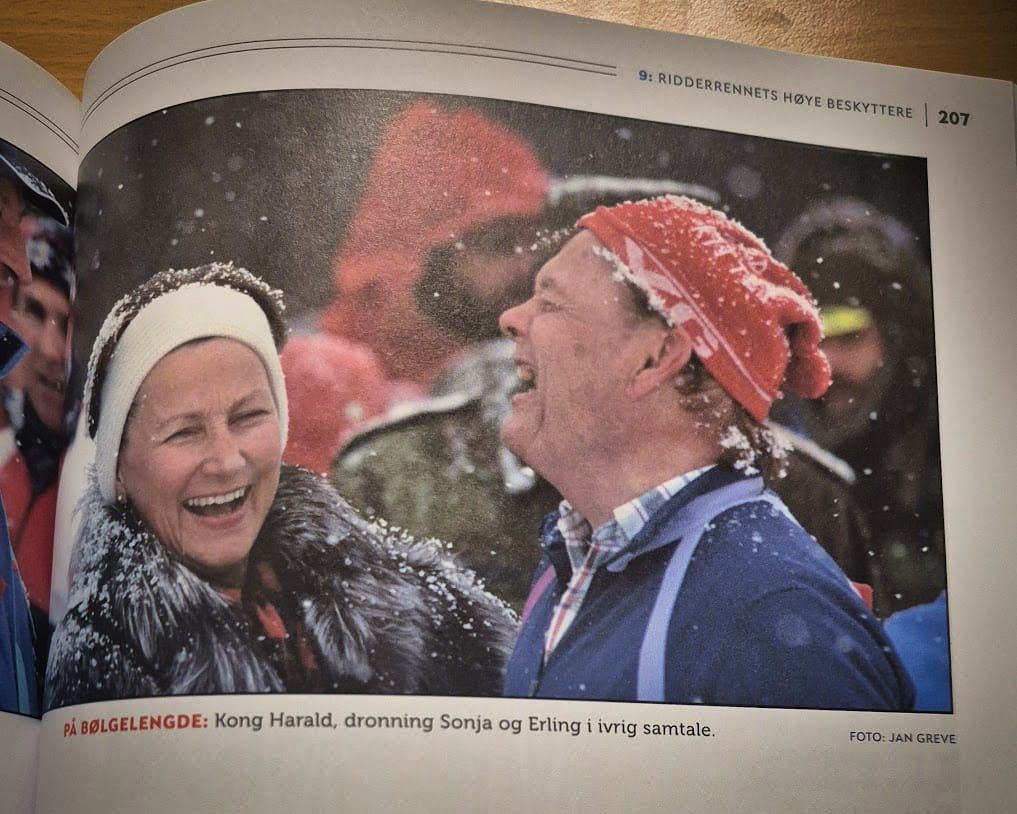
This is inclusion in practice, with snot, sweat and lactic acid as its common denominator.
Of all the duties the royals carry out, few strip them of the formal role quite as efficiently as Ridderrennet. It is an arena in which royal etiquette must give way to the brutal honesty of nature.
As our founder Erling Stordahl put it so neatly: "Shared exhaustion breaks down every formal barrier that stands in the way of genuine human communication."
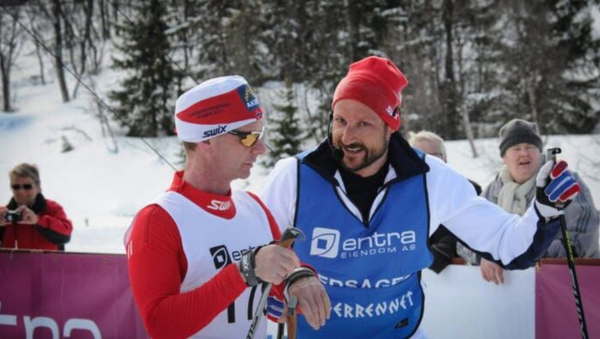
It is precisely this shared exhaustion that lies at the heart of a partnership now entering a new era. The Royal Court has recently confirmed that HRH Crown Prince Haakon will carry on the patronage of Ridderrennet. This is more than a formality. It is the confirmation of a tradition stretching across four generations, and a royal family that doesn't merely watch. It takes part.
No time for a nose-wipe
There is scarcely a better illustration of how Ridderrennet turns the hierarchy on its head than the story of Queen Sonja from 1979. She took part as guide for the blind skier Aud Berntsen. Aud had one goal in mind: she was going to win. When Sonja asked politely, somewhere along the course, if they might slow a touch so she could blow her nose, she received the clearest possible instruction from the panting, victory-hungry Aud: "Blow it on your mitten, I do!"
Whether the then-Crown Princess actually took the advice, history does not record. But Aud won her class. The story captures the point perfectly. On the course at Beitostølen you are not first and foremost royal. You are a teammate, with a finish line to reach.
King Olav in anorak and flat cap
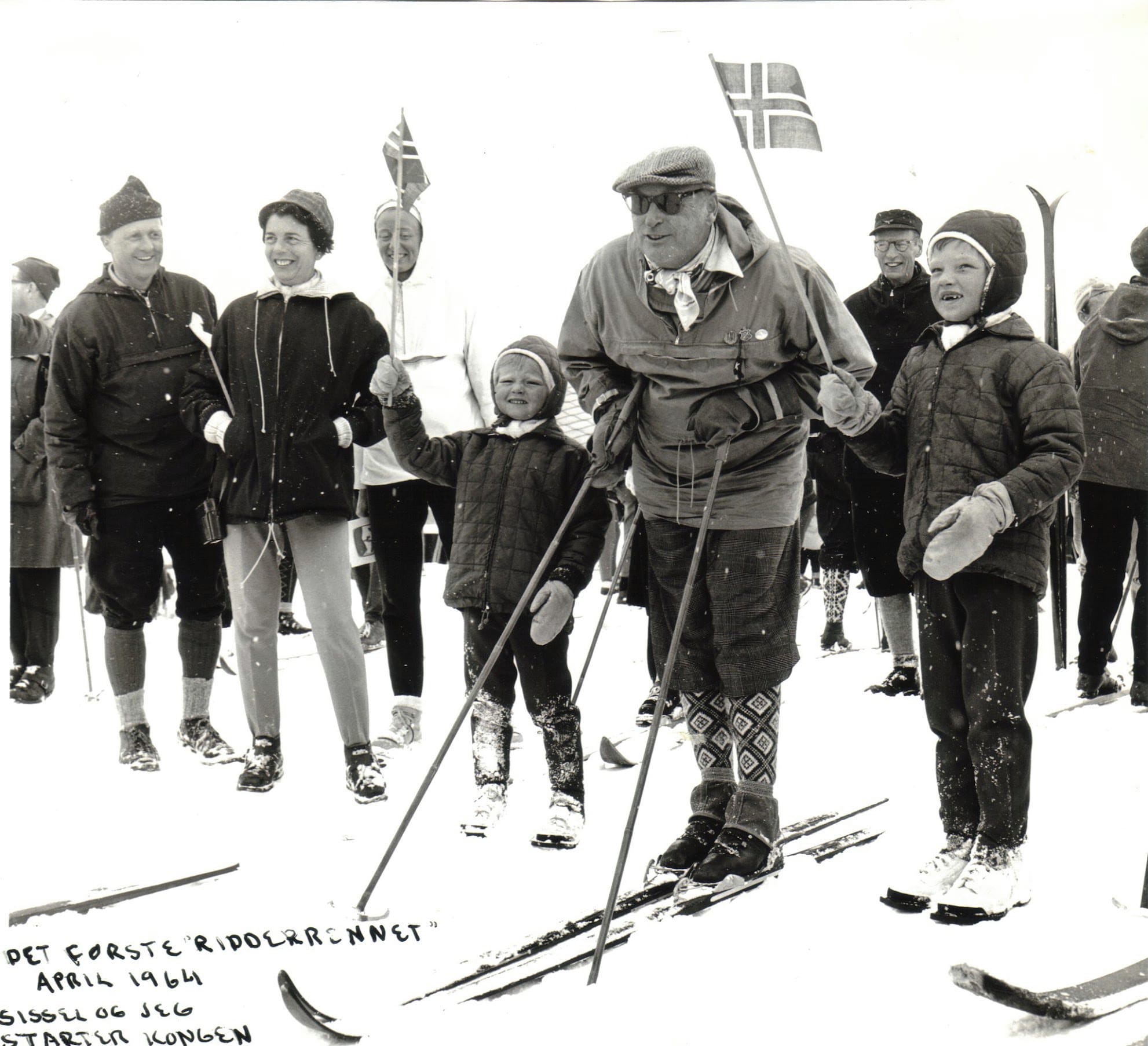
It all began with King Olav V. At the very first race, in 1964, he didn't merely declare the thing open. He strapped on the skis and covered the full 25-kilometre course himself. The photographs of the King afterwards, tired and delighted, waving to the crowd in anorak and flat cap, set the tone for everything that followed.
King Olav showed a common touch, and a respect for the occasion, that ran deep. When the royal family attended the banquet afterwards, local women in bunad (traditional Norwegian dress) served up rømmegrøt, a rich sour-cream porridge with rather a lot of butter on top. The royals were not about to be outdone, and dutifully followed the fine old custom of tasting all twenty varieties on offer.
It is recorded from later that evening that young Crown Prince Harald, once the meal was safely done with, dryly quoted the old verse: "Kill me, my Liege, but not with porridge!"
A thrashing on skis
Inclusion also means acknowledging the strength of others, regardless of ability. When Crown Prince Haakon took on the role of guide for the blind elite skier Helge Flo, he rather swiftly discovered the pressure involved. Flo was diplomatic beforehand, saying he was looking forward to a pleasant outing together. Haakon got an absolute going-over. Mid-race, the Crown Prince was brutally honest: "I haven't a hope of keeping up!"
Princess Märtha Louise has also learnt that the role of guide is no gentle stroll. She skied with Kjetil Korbu Nilsen. "We chatted away until roughly halfway through, and then things went rather quiet from my end," she recounted with a laugh afterwards, speaking of the moment her legs ran out of answers.
A conversation in a storm
The most powerful image from this unusual partnership comes from 1973. The then-Crown Prince Harald was guiding the deaf-blind Halvdan Larsen. In a strong wind and thick snow, the two of them communicated by the Crown Prince writing letters, one by one, in the palm of Halvdan's hand. There, in the middle of a storm beneath Bitihorn, a conversation arose about sport and the feel of the outdoors that transcended both sensory loss and royal distance.
The future is secure
Crown Prince Haakon has accepted the invitation to carry on the patronage. It sends a powerful signal. The royal family still sees the value of what Ridderrennet is for. We are all equal when the starting gun goes.
The circle has closed, too. The fourth generation, Princess Ingrid Alexandra and Prince Sverre Magnus, have already made their debut as medal-presenters.
From King Olav's first pole-plant in 1964 to the modern race of today, the royal family has shown us that real inclusion is about standing shoulder to shoulder. And, now and again, being told to blow one's nose on one's mitten.